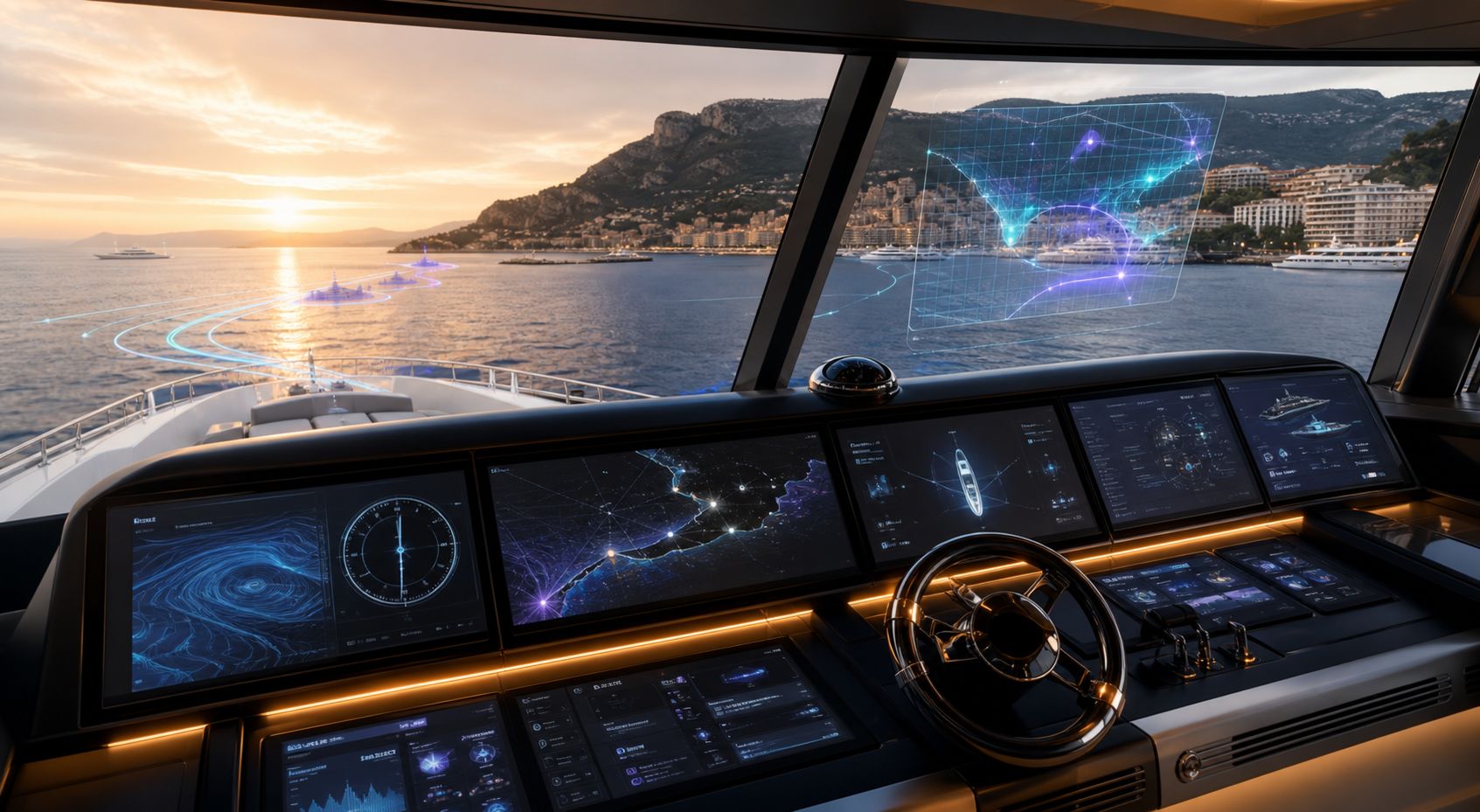
AI in the yacht industry is already changing how owners, captains, charter managers, shipyards and guests experience life at sea. The most useful applications are not science fiction. They are practical systems that improve route planning, maintenance, energy use, guest personalization, crew coordination and safety decisions. The best yachts will not replace expert captains or experienced crew with algorithms. They will use artificial intelligence as a high-quality decision layer that helps people operate more precisely, anticipate problems earlier and deliver a more personal charter experience.
Key Takeaways
- AI is most valuable on yachts when it supports human decisions rather than replacing captain, engineer or crew judgement.
- The strongest near-term use cases are navigation support, predictive maintenance, fuel and energy optimization, guest personalization and operational planning.
- Autonomous shipping research from organizations such as the IMO and DNV is influencing the technology stack, even if superyachts remain human-led.
- Privacy, cybersecurity and classification rules matter because yachts handle sensitive owner, guest, route and operational data.
- For charter brands, AI can improve response speed, itinerary matching and onboard personalization, but luxury service must still feel human and discreet.
How is AI in the yacht industry used today?
AI in the yacht industry is used in four broad ways: sensing, prediction, optimization and personalization. Sensors collect data from engines, batteries, navigation instruments, HVAC systems, stabilizers, tanks, weather feeds, security systems and guest preferences. Machine learning models then detect patterns, predict failures, recommend routes, optimize energy consumption or suggest service actions.
This matters because a modern superyacht is both a luxury residence and a complex maritime asset. A large yacht can combine hotel operations, engineering systems, aviation-grade logistics, cybersecurity concerns, regulatory documentation and high-touch hospitality. AI helps connect these layers so the crew can act earlier and with better context.
The International Maritime Organization tracks autonomous shipping through its work on Maritime Autonomous Surface Ships, while DNV publishes guidance and services around autonomous and remotely operated ships. Those frameworks are mostly written for commercial maritime operations, but the same principles are relevant to yachts: clear accountability, robust safety cases, cyber resilience, human oversight and reliable sensor data.
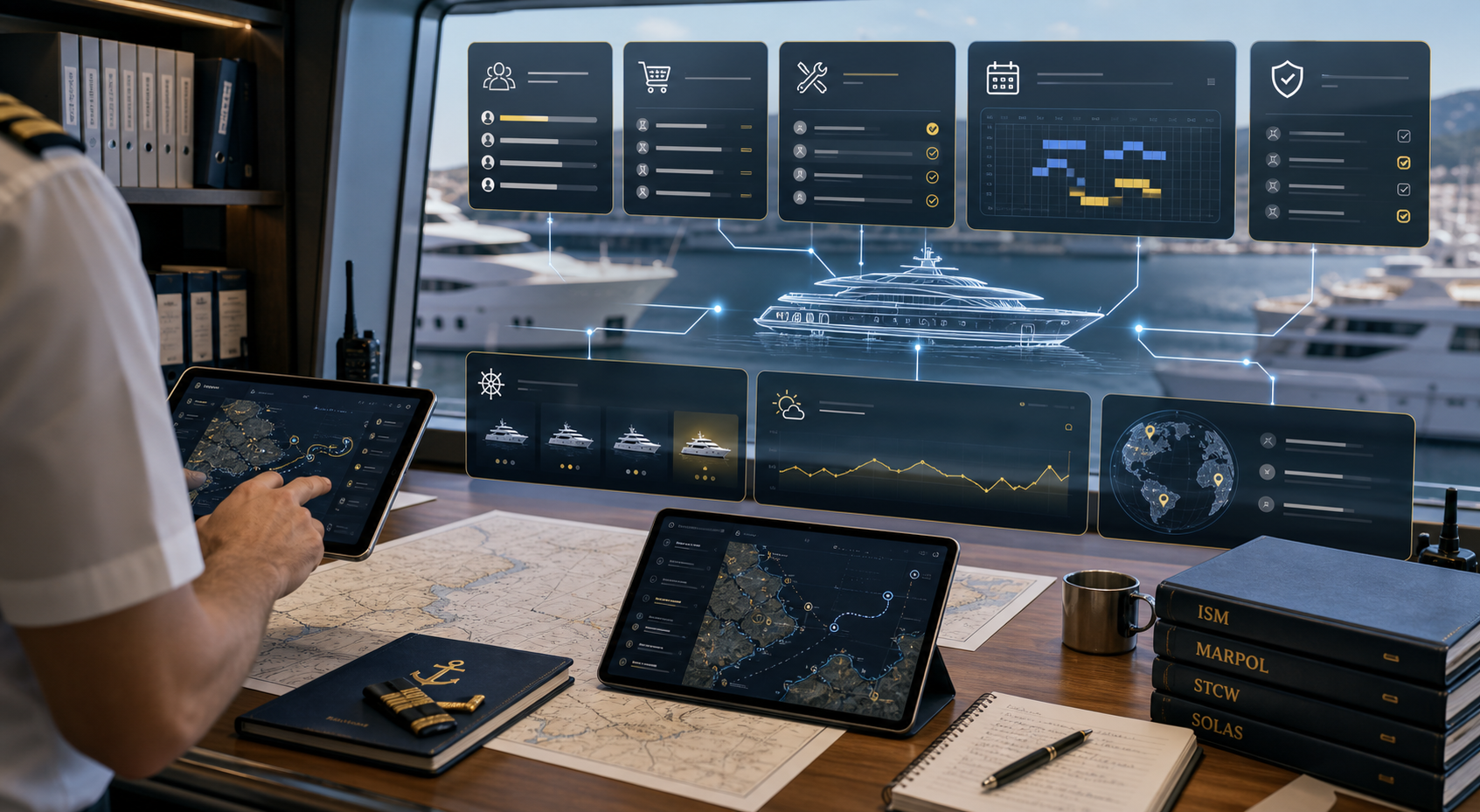
AI-assisted navigation and passage planning
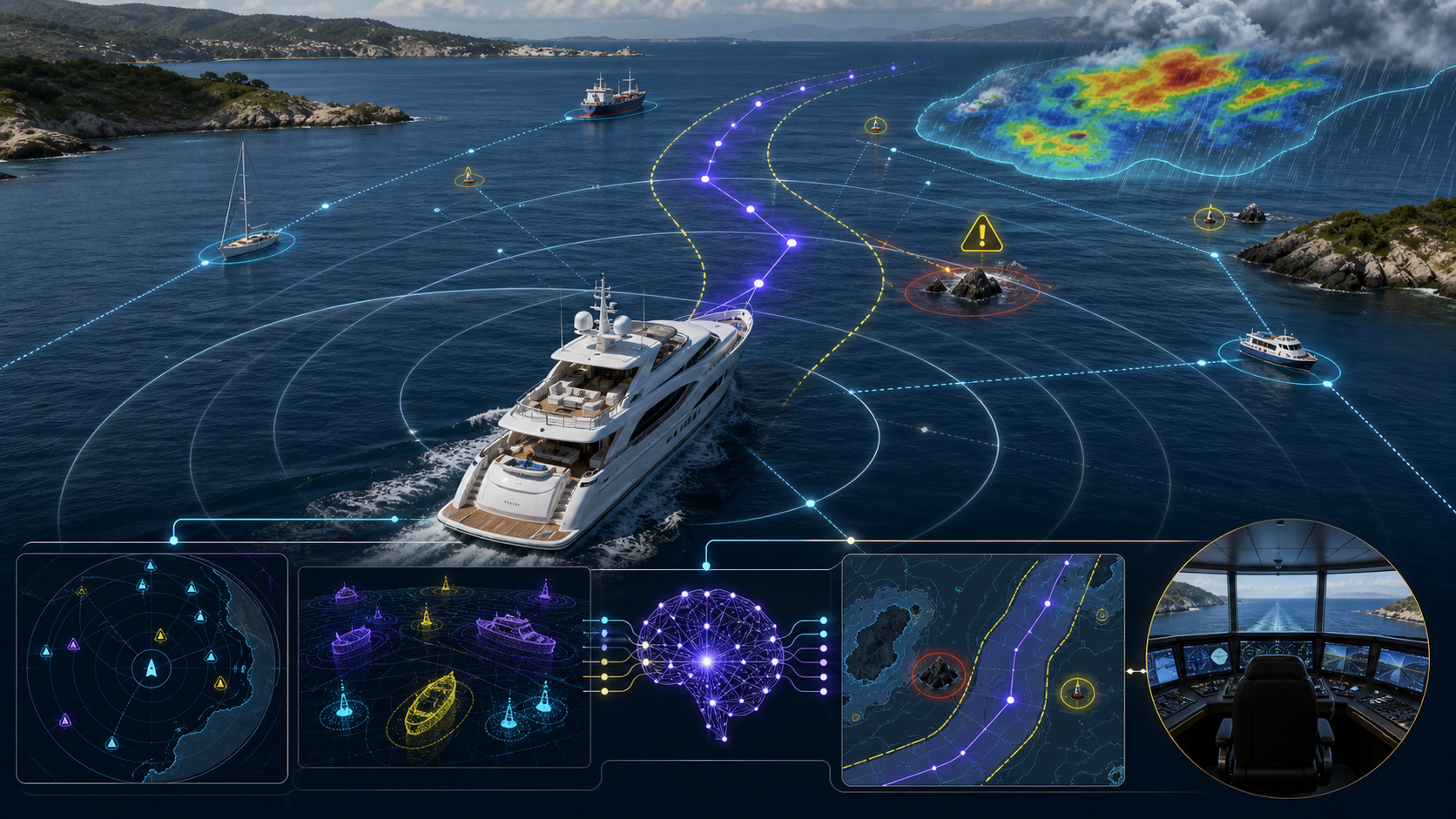
Navigation is one of the most visible areas where AI can help. Modern systems can combine chart data, AIS traffic, radar, weather forecasts, current models, restricted zones and vessel performance data. AI can then suggest safer or more efficient routes, flag unusual traffic patterns, predict arrival windows and support decision-making during complex coastal approaches.
For yacht captains, this is not about handing command to a machine. It is about reducing cognitive load. A captain still owns the decision, but an intelligent system can process more variables than a human team can manually compare in real time.
For charter guests, this can translate into smoother itineraries. If the weather turns, AI-assisted planning can propose an alternative anchorage, a better tender transfer window or a quieter route that preserves the guest experience while protecting safety margins.
Predictive maintenance for yacht engineering
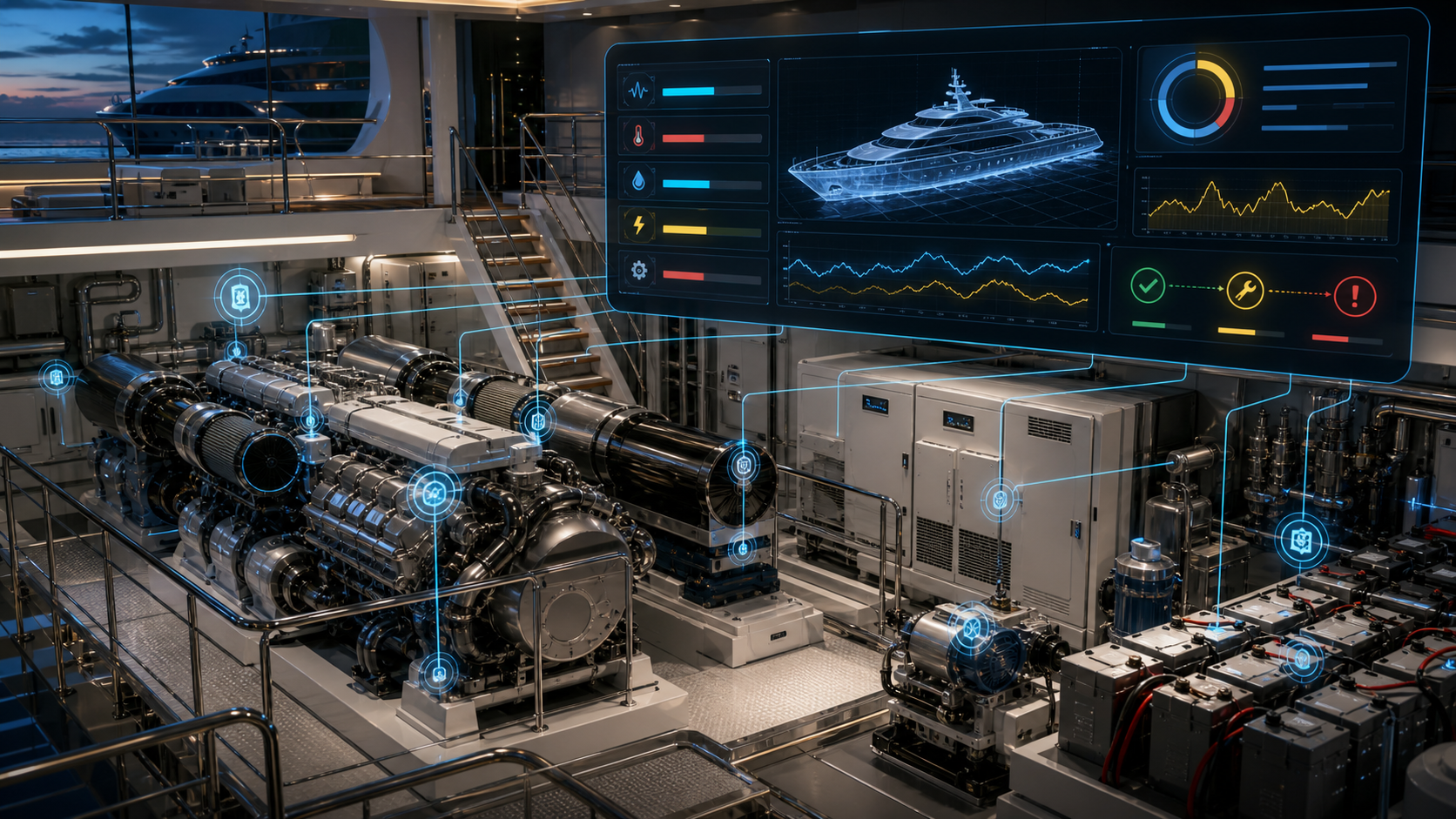
Predictive maintenance is one of the highest-value AI use cases because downtime at sea is expensive, stressful and reputationally damaging. A yacht engineer can use vibration data, temperature readings, oil analysis, generator load, pump cycles and historical maintenance logs to detect early signs of failure.
Instead of servicing everything on a rigid calendar, AI can help prioritize what deserves attention before a charter, during a yard period or between passages. A generator showing unusual vibration can be inspected before it becomes a guest-facing failure. A pump cycling more often than normal can be checked before it affects freshwater, HVAC or bilge systems.
The value is practical: fewer surprises, better spare-part planning, shorter yard time and more confidence before a high-stakes itinerary.
Smarter energy, fuel and hotel-load optimization
Yachts are energy-intensive assets. They run propulsion, generators, batteries, stabilizers, watermakers, refrigeration, galley systems, entertainment, lighting, HVAC and hotel loads. AI can help model how these systems interact.
On a hybrid or diesel-electric yacht, optimization software can recommend when to run generators, when to rely on batteries, how to reduce peak loads and how to prepare for silent anchorage mode. On a conventional yacht, it can still support fuel planning, speed recommendations and generator efficiency.
For owners and charter managers, this is not only about sustainability. It is also about comfort. Better energy planning can reduce noise, vibration, fuel burn and operational stress during an itinerary.
AI concierge and personalized charter experience
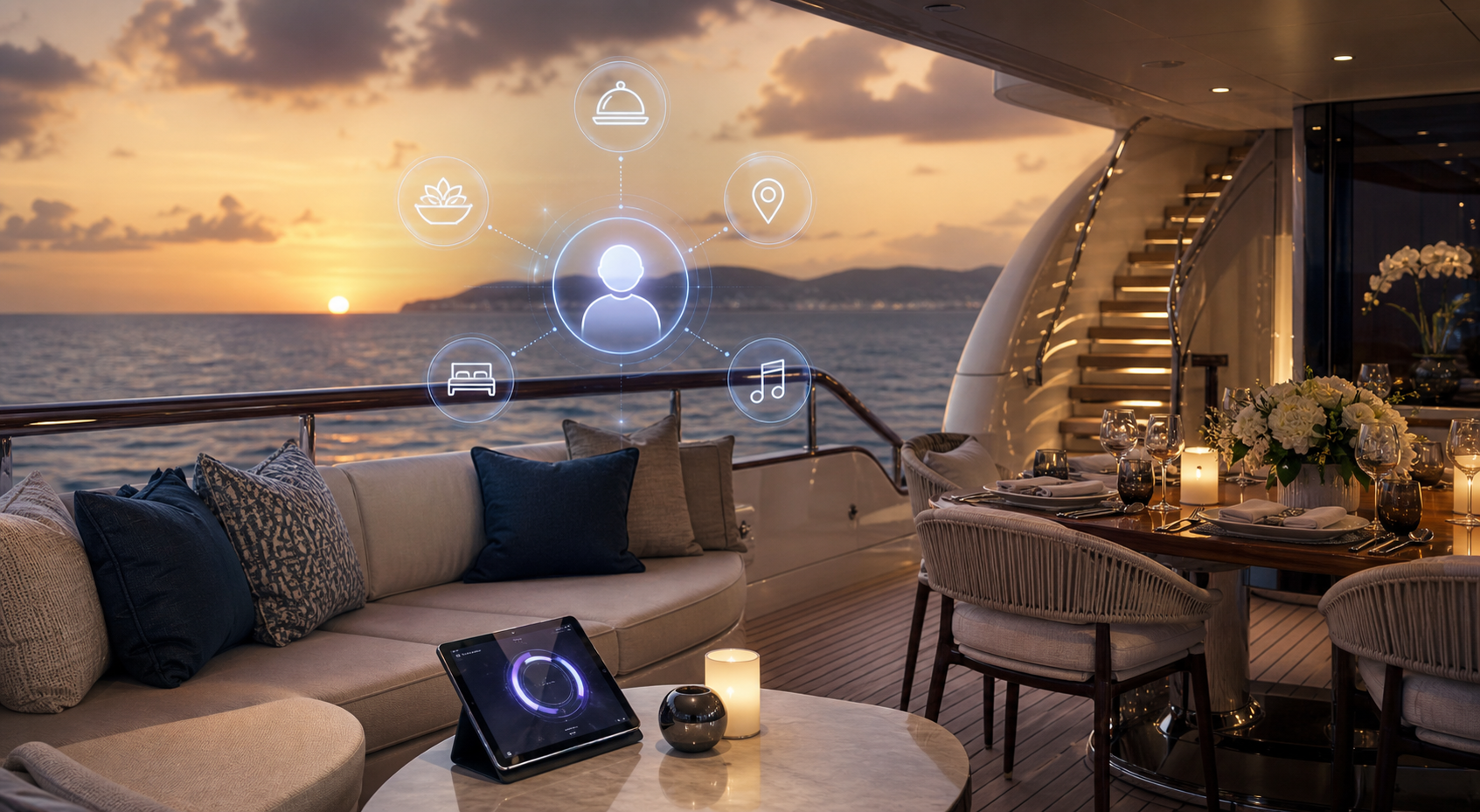
Luxury charter is built on anticipation. AI can help crew and brokers understand preferences before guests ask. Dietary requirements, favorite wines, cabin temperature, preferred activities, tender schedules, spa appointments, restaurant bookings and destination interests can all feed into a discreet guest profile.
Used well, this makes service feel seamless. A guest who prefers quiet anchorages can receive itineraries that avoid crowded bays. A family with children can receive shore activity suggestions that fit weather, tender time and safety. A repeat charter guest can arrive to a yacht that already understands their rhythm.
Used badly, AI feels intrusive. The rule for luxury yachting is simple: personalization should feel elegant, private and human. The technology should disappear behind the service.
Crew, broker and fleet operations
AI can also support the office side of yachting. Charter brokers can match guests with yachts based on party size, budget, preferred destinations, toys, onboard style, wellness needs and itinerary constraints. Yacht managers can use AI to summarize logs, prepare maintenance reports, coordinate provisioning and identify schedule conflicts.
For captains and crew, AI can reduce administrative load. Digital logbooks, safety drills, inventory, defect reporting, compliance calendars and handover notes can become easier to search and summarize. This gives teams more time for hospitality and operational readiness.
For a charter platform such as [Luxe Yacht](/), the same logic can improve discovery. A visitor looking for a quiet family charter, a party-focused yacht, a wellness itinerary or a high-speed day charter can be guided toward a more relevant shortlist.
AI in yacht design, refit and digital twins
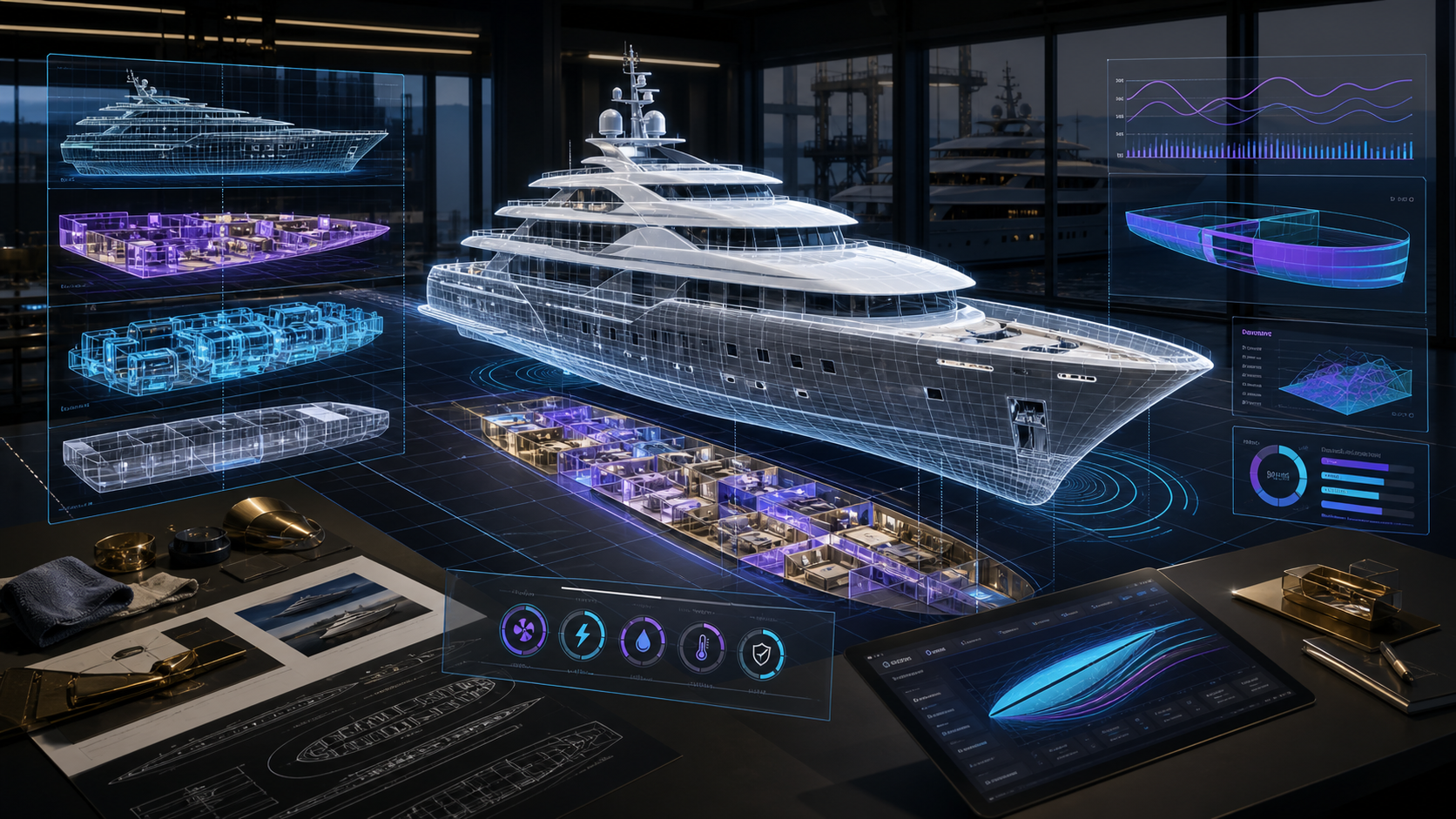
Shipyards and designers increasingly use simulation, data modelling and digital twin concepts to improve yacht design and lifecycle planning. A digital twin is a data-rich virtual representation of a yacht or yacht system. It can help teams test energy use, interior layouts, maintenance access, vibration, HVAC behavior and refit options before physical work begins.
For new builds, this can improve decisions around propulsion, battery capacity, hotel loads and space planning. For refits, it can help evaluate whether a yacht can support new toys, upgraded AV systems, Starlink-style connectivity, new wellness spaces or more efficient energy systems.
The outcome is better planning. Owners get clearer trade-offs. Shipyards reduce surprises. Managers can connect operational data back into the yacht lifecycle.
Cybersecurity, privacy and human oversight
AI increases the value of yacht data. Route history, guest preferences, owner schedules, crew records, maintenance logs, camera systems and connectivity tools are sensitive. This makes cybersecurity a core part of any AI strategy.
The IMO has separate guidance around maritime cyber risk management, and classification societies increasingly treat digital systems as part of operational safety. In luxury yachting, the stakes are even more personal. A yacht is a private space. AI tools must protect confidentiality, define access rights and keep a clear audit trail.
Human oversight is also non-negotiable. A recommendation engine can suggest a route. A predictive system can flag a maintenance risk. A concierge model can propose a guest itinerary. But the captain, engineer, manager and crew must remain accountable for the final decision.
What this means for yacht owners and charter guests
For owners, AI should be evaluated through outcomes: fewer failures, safer operations, better energy performance, lower administrative burden and a more consistent guest experience. The goal is not to buy fashionable technology. The goal is to make the yacht easier to operate and more enjoyable to use.
For charter guests, AI should improve relevance and comfort. Better yacht matching, smarter itineraries, more responsive service and smoother onboard operations can all improve the charter. But the luxury feeling still comes from people. AI should help the crew be more attentive, not less present.
For brokers and yacht managers, the opportunity is speed and precision. AI can help filter options, summarize requirements, compare itineraries and prepare better recommendations. A platform that combines expert human knowledge with intelligent tools will feel faster, more personal and more trustworthy.
How Luxe Yacht can use AI without losing the luxury touch
The best approach for [private yacht charter](/) is selective. Use AI where it improves relevance, safety and operational precision. Keep human expertise at the center of every client-facing decision.
A practical roadmap could include AI-assisted charter matching, preference-aware itinerary planning, smart inquiry qualification, predictive maintenance content for yacht owners, and destination recommendations for Mediterranean yacht charters. The same system can support yacht selection, seasonal planning and a more responsive charter inquiry process.
The winning formula is not automation for its own sake. It is discreet intelligence that makes a yacht charter feel more personal, safer and better prepared.
FAQ
Will AI replace yacht captains or crew?
No. In the foreseeable future, AI is best understood as decision support. Captains, engineers, managers and crew remain responsible for safety, seamanship, hospitality and final judgement.
What is the most valuable AI use case for yachts?
Predictive maintenance is often the most practical because it can reduce downtime, improve readiness and prevent expensive failures. Guest personalization and itinerary planning are also high-value for charter.
Is AI useful for smaller charter yachts?
Yes, but the stack should be lighter. Smaller yachts can benefit from AI-assisted booking, itinerary planning, maintenance reminders, weather routing and guest preference management without needing a complex enterprise system.
What are the biggest risks of AI in yachting?
The biggest risks are overtrusting automated recommendations, poor data quality, weak cybersecurity, privacy leakage and using generic tools without maritime context.
Sources and Further Reading
- International Maritime Organization: Autonomous shipping
- DNV: Autonomous and remotely operated ships
- International Maritime Organization: Maritime cyber risk management
- IACS: Cyber Resilience
- AWS for Industries: Maritime and shipping digital transformation
A yacht charter is more than a vacation. It is a journey through history, culture, and natural beauty, shaped by a crew that knows when to be present and when to let the horizon do the work.
Explore charter yachts